Lomo Saltado from the Tomb Raider Cookbook

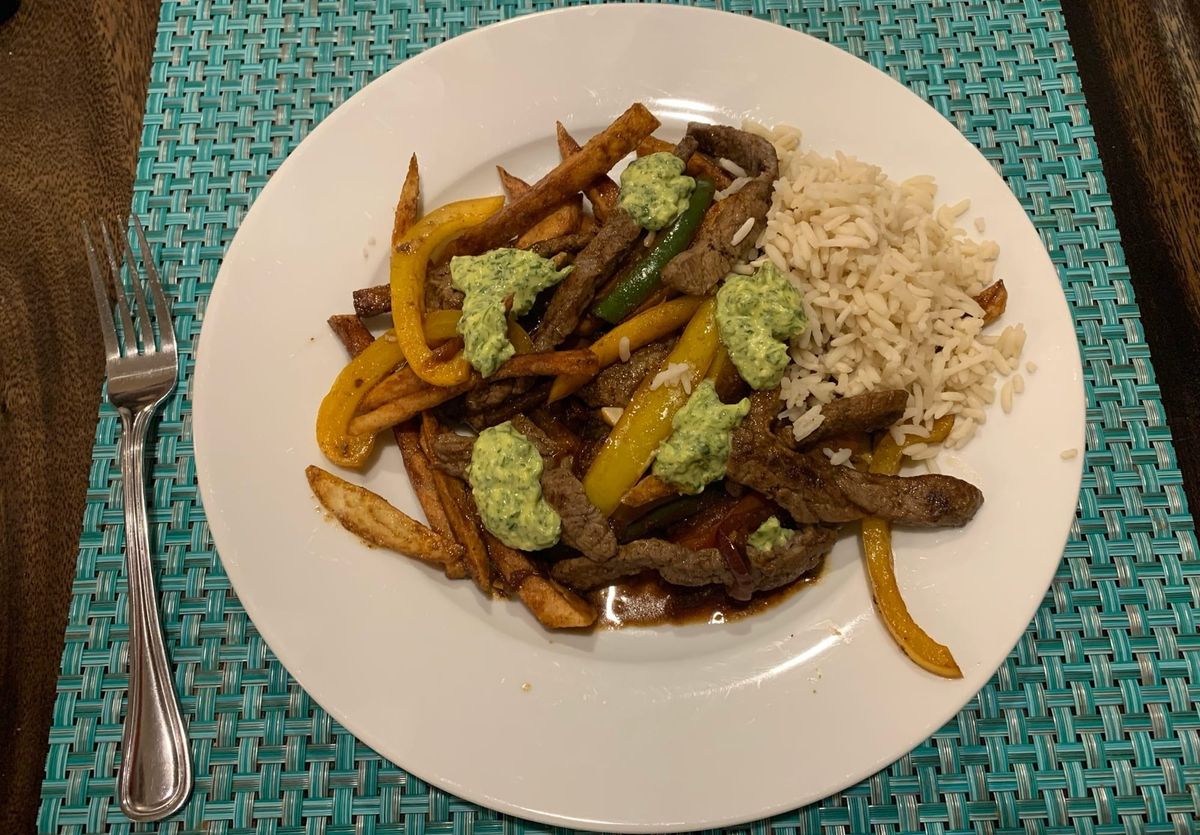
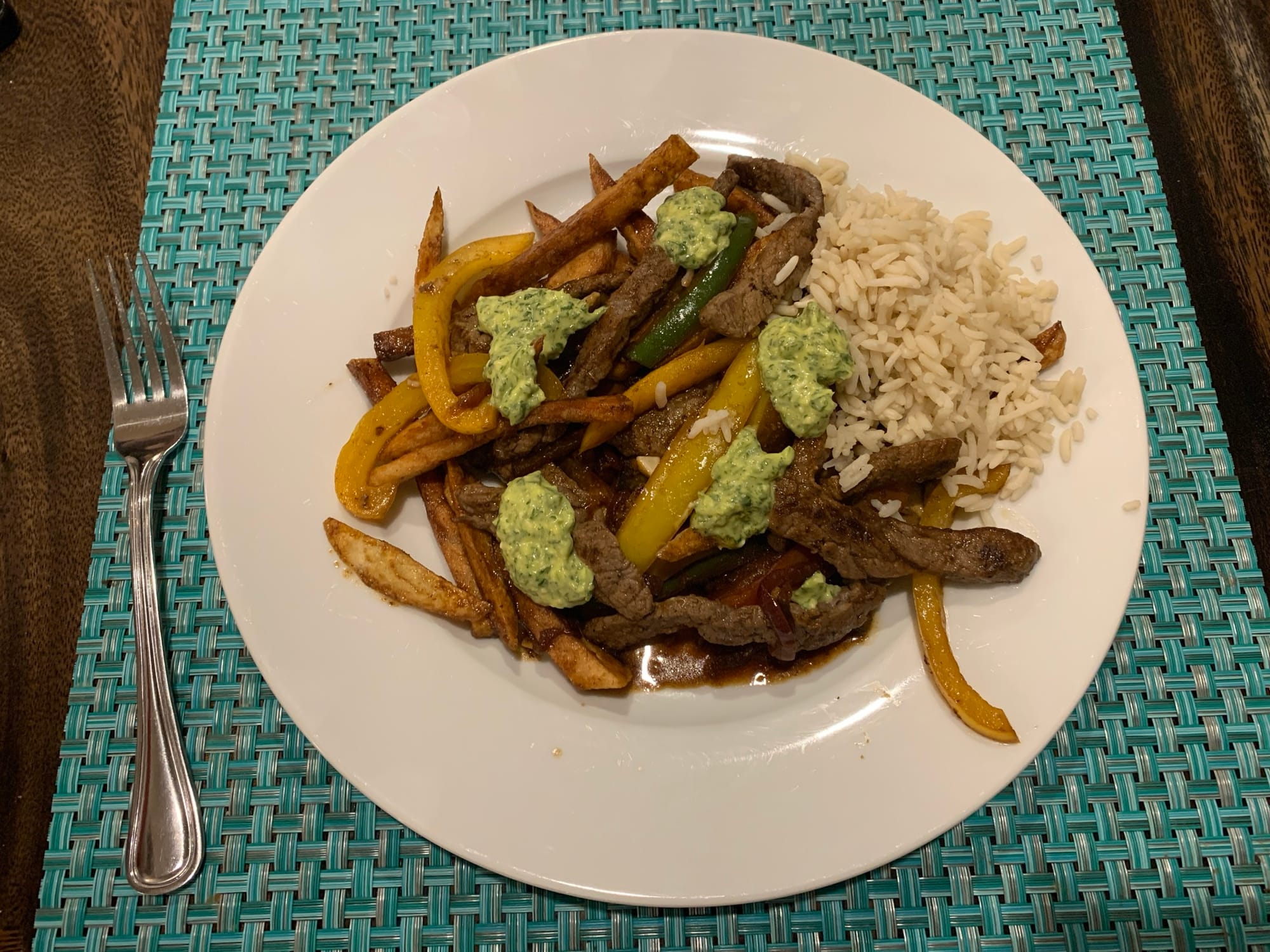
Lomo Saltado is a Peruvian stir fry influenced by Chinese cuisine, combining local flavors with Cantonese cooking techniques. Traditionally, it contains strips of steak with red onions, tomatoes, spices, French fries and soy sauce. The Tomb Raider Cookbook's recipe for this dish is so good, it's featured on the front cover!
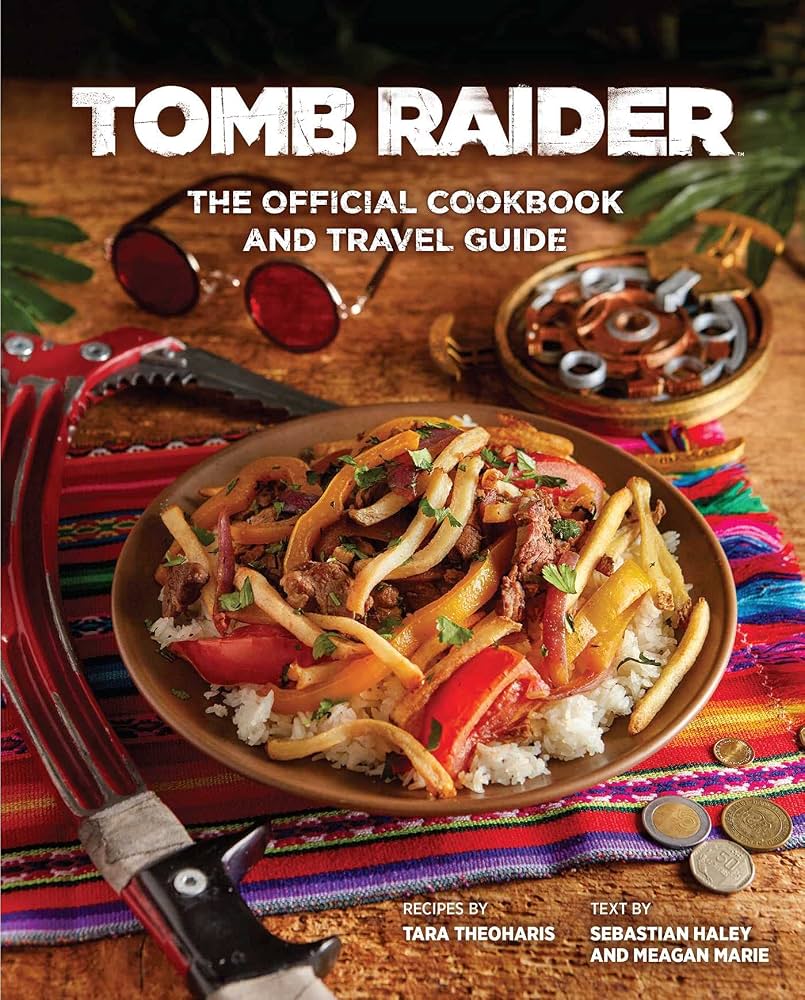
I've made Lomo Saltado before from an American cook's recipe, but this one veers closer to the traditional version (which is not to declare it's authentic, opinions will vary on that) with more spices and an Aji Verde sauce. It is quite the production, since you make your own fries for it, but it was so worth it. I also ordered a jar of aji amarillo paste, one of the traditional ingredients, but not an aji amarillo pepper itself. Luckily, the recipe tells you that if an aji amarillo is unavailable, you can use a yellow bell pepper and a jalapeno pepper, so I did that.
Peru has appeared in every continuity of the Tomb Raider franchise. In the first Tomb Raider and its associated remakes, Lara ventures to the lost city of Vilcabamba in search of one third of the Scion, an Atlantean artifact with immense knowledge of their lost race. In Tomb Raider: Legend, Lara is part of an excavation in Paraíso, Peru in her youth that ends in disaster, but she returns years later when she believes one of her colleagues may have survived. In Shadow of the Tomb Raider, Lara travels to Peru and uncovers another lost city, Paititi, as she races to undo an apocalypse she recklessly triggered.

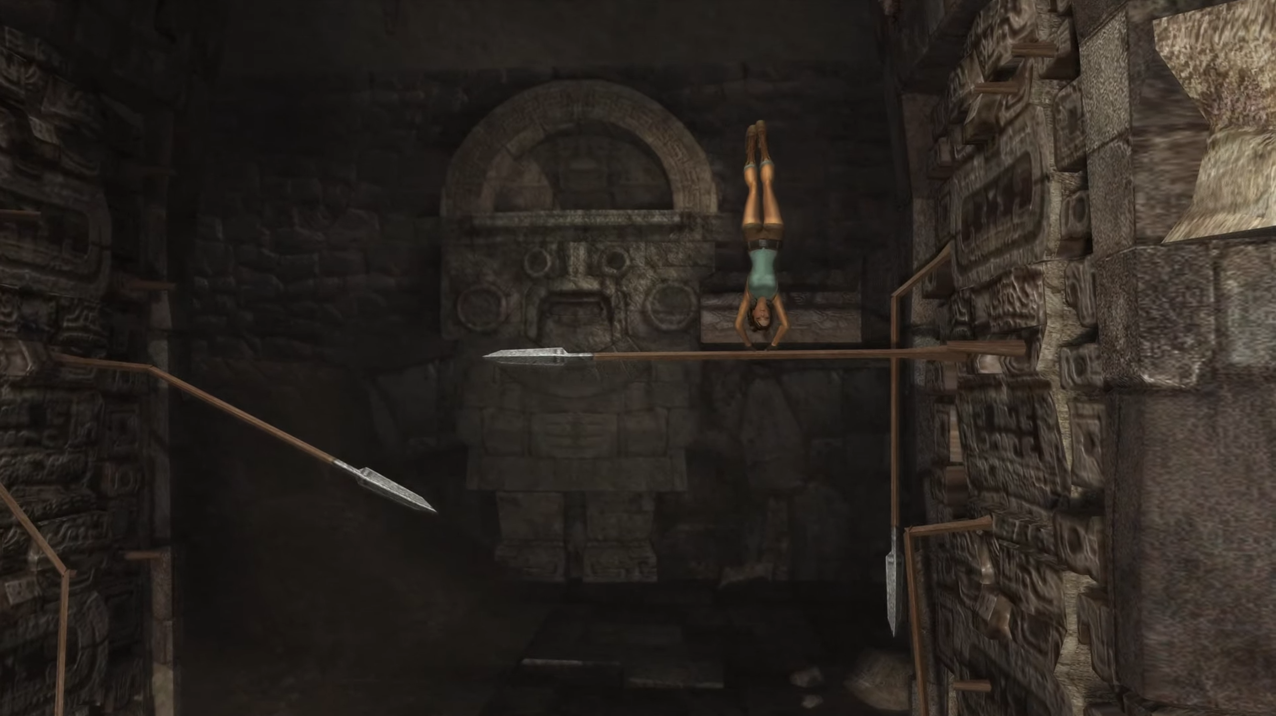
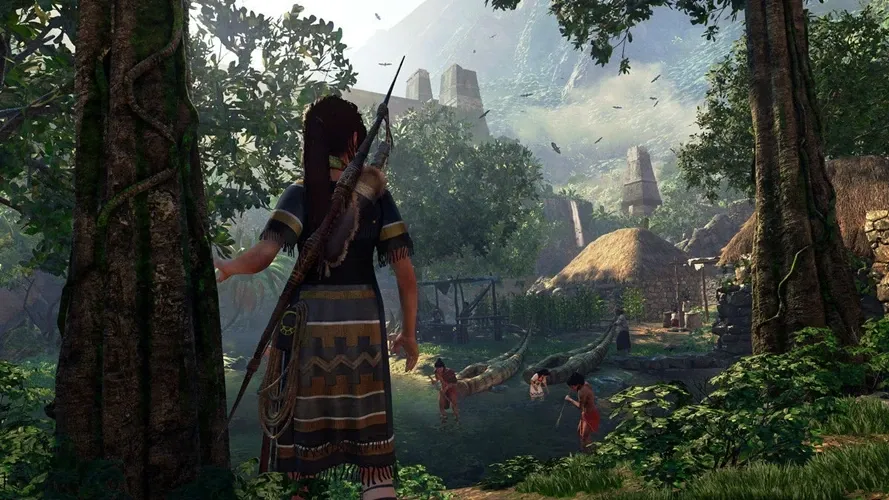
Peru in Tomb Raider 1, Legend and Shadow.
The longest part of this recipe is making the fries. When I made this past weekend, I had a day out planned, seeing a movie before I came back to take care of this. I made the Aji Verde sauce ahead of time (a sauce with mayo, lime juice, cilantro, aji amarillo paste, huacatay paste or chopped mint, cotija or Parmigiano cheese and garlic, which has to marinate anyway) and peeled, cut and soaked most of the potatoes, doing the last one when I came back. I also had some cooked rice on hand in the freezer, which I thawed to serve with this afterwards.
The recipe calls for 2 tbsp of lime juice, which I was able to get from one lime, but yours may be juicier or less. It also asks for a bunch or about 2 cups of cilantro; my bunch equaled one cup and so that was plenty for this.
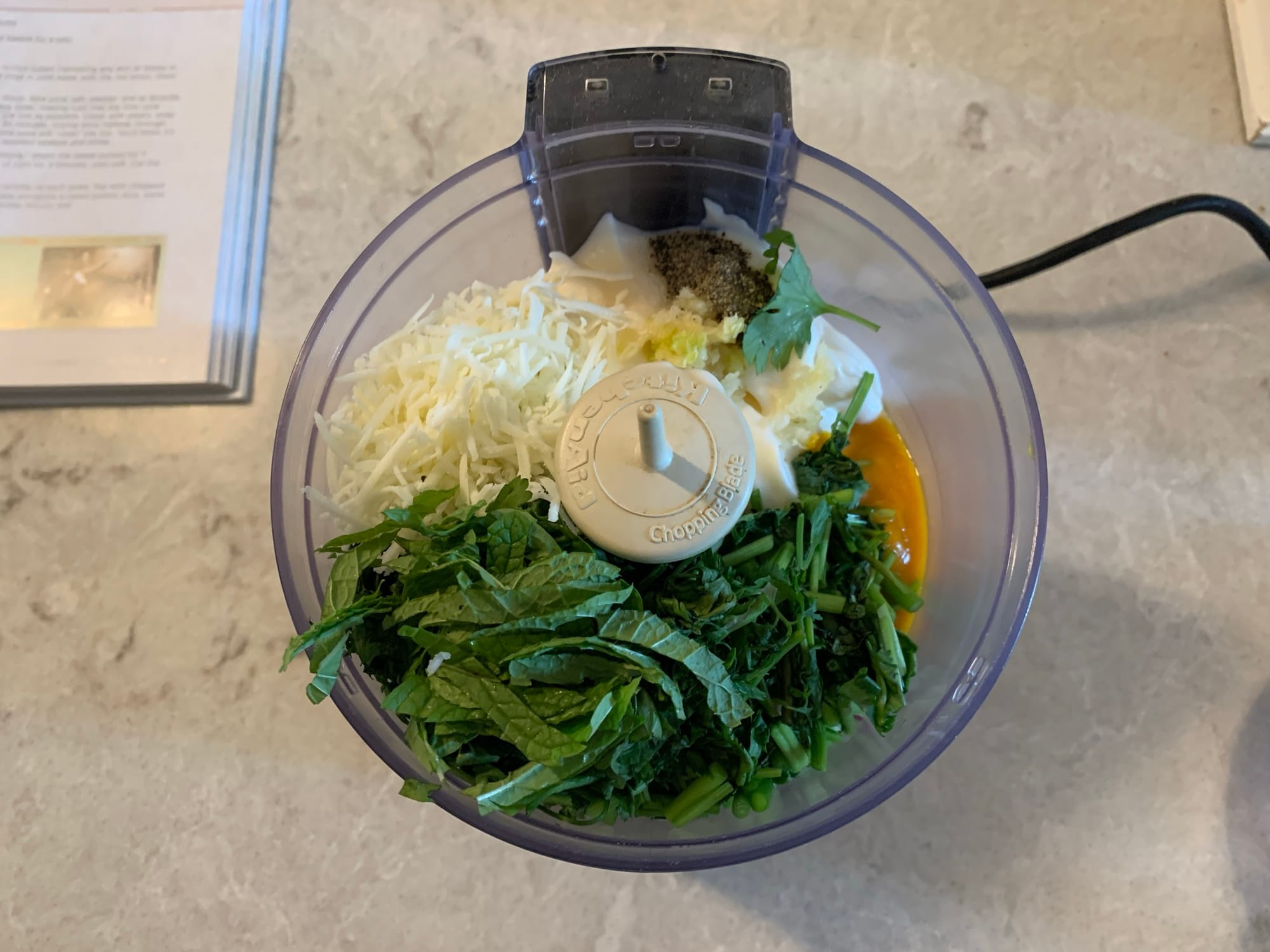
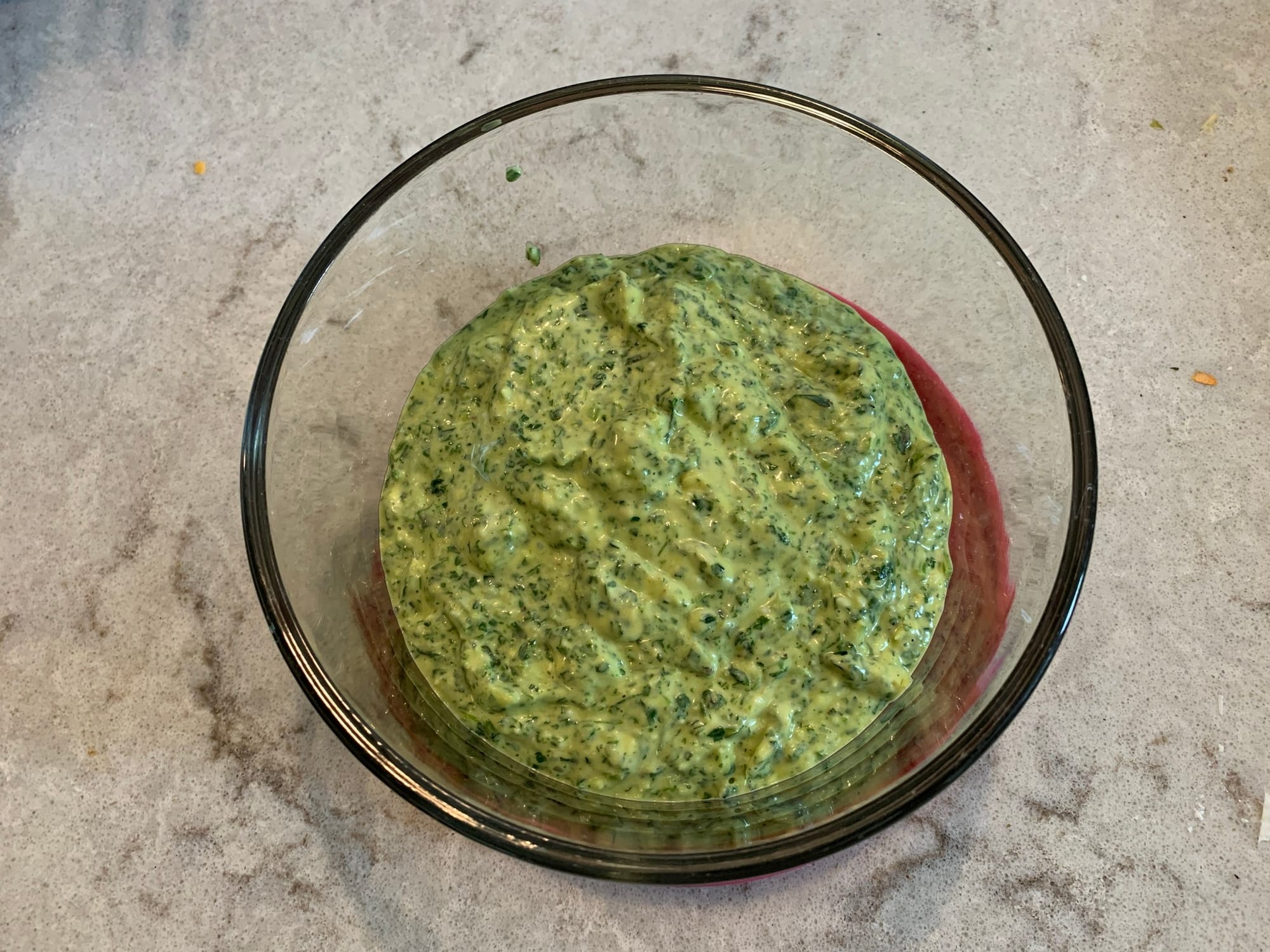
Aji Verde before and after.
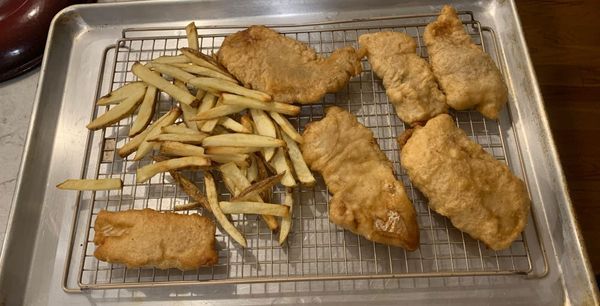
To my consternation, I realized I didn’t have enough vegetable oil for deep frying the fries. Fortunately, my friends (and two readers of this blog, hello) drove with me to the nearby convenience store to get some. I should have got a bigger bottle, since the recipe asks for 3 inches, but we made do. I had to cook the fries in six batches, 5 minutes each, so that was the most time consuming part of the recipe.
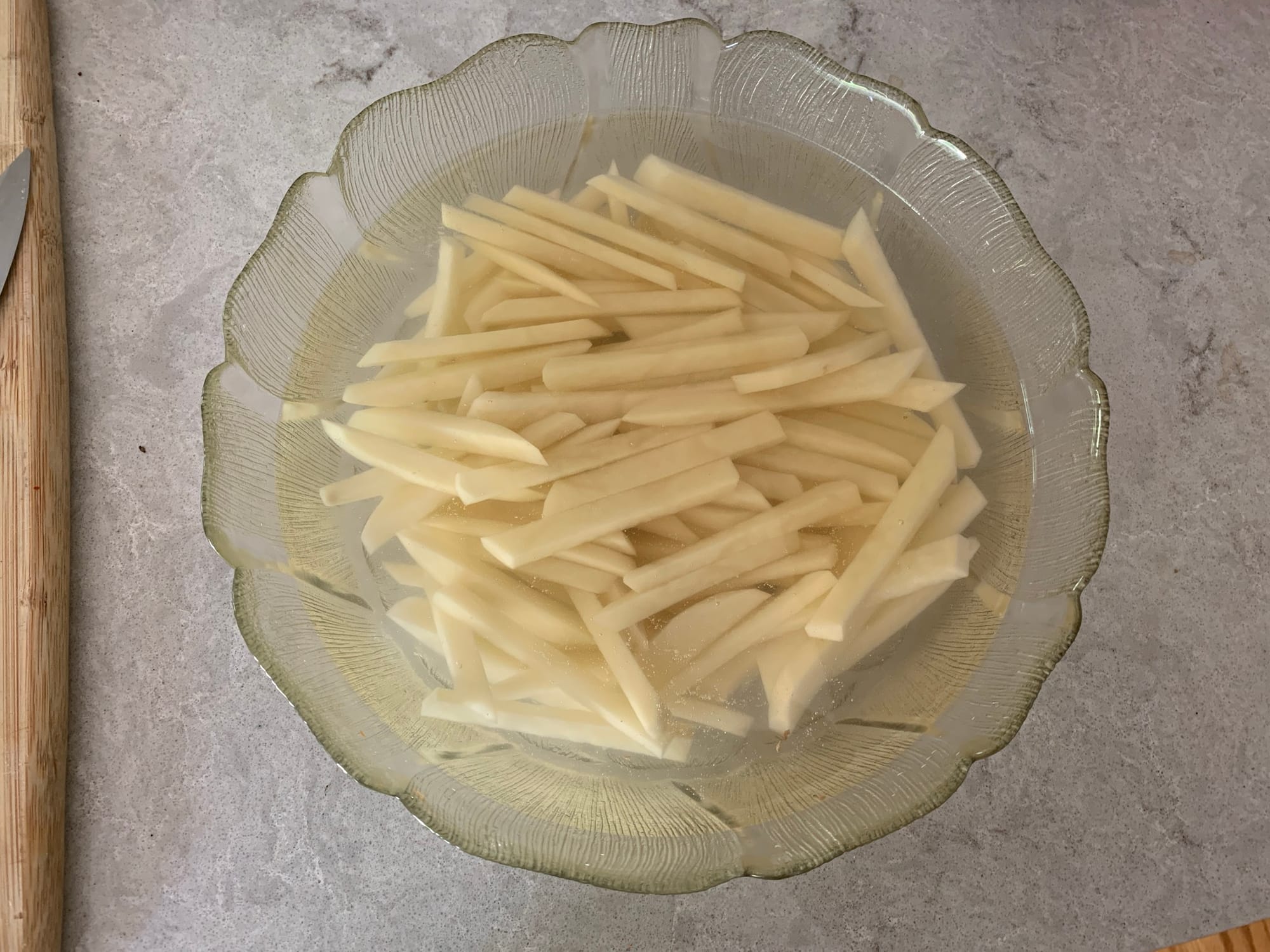
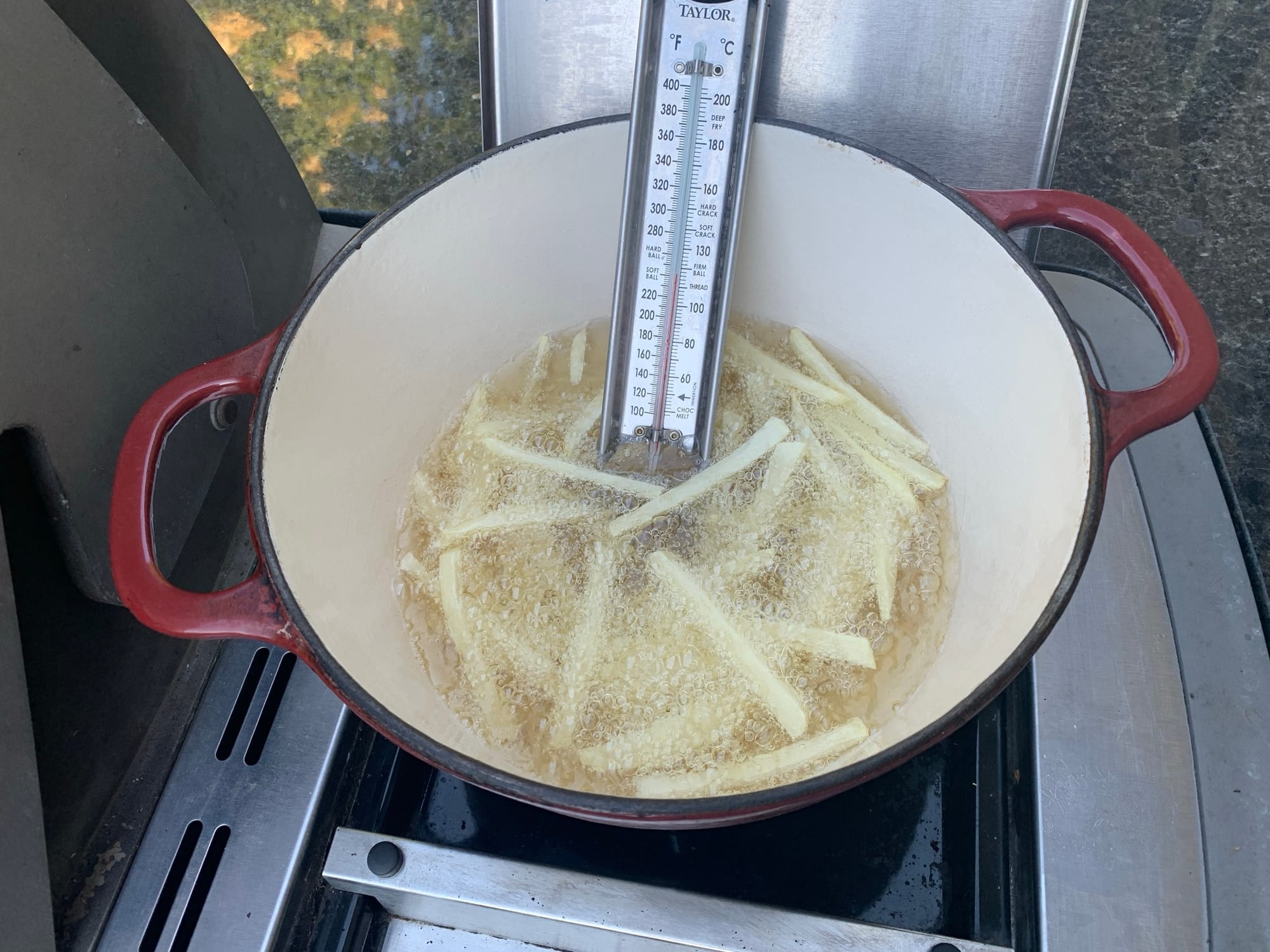
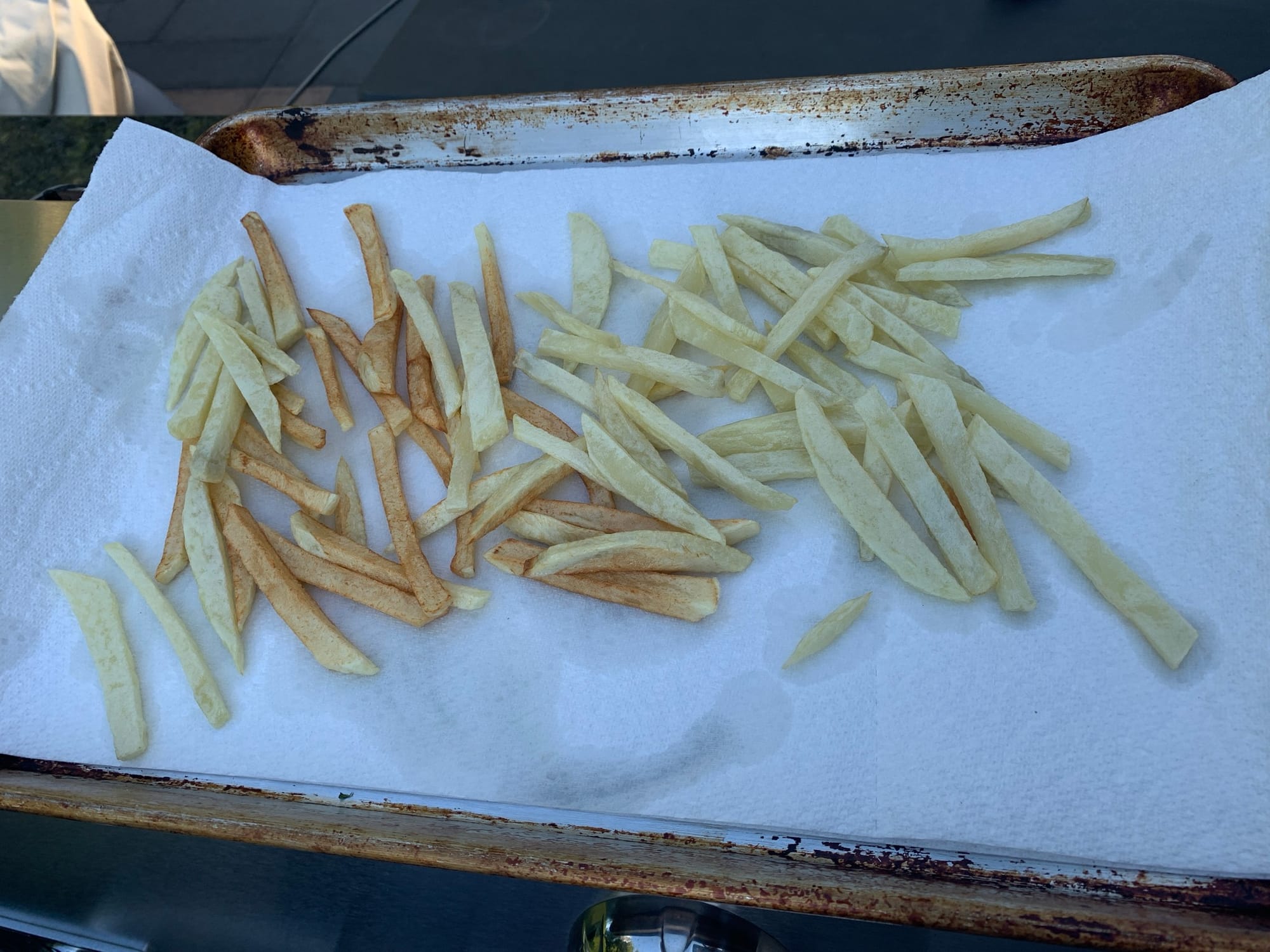
Evolution of a potato (or two, or three).
As with any stir fry, the preparation may take forever, but the cooking time is fast. I had pre-sliced sirloin steak whereas the recipe calls for a more expensive tenderloin; sirloin would work well enough for a quick recipe. Then you add sliced red onions, Roma tomatoes, an aji amarillo (or yellow and jalapeno peppers), and make a sauce with soy sauce, cumin, garlic and white vinegar.
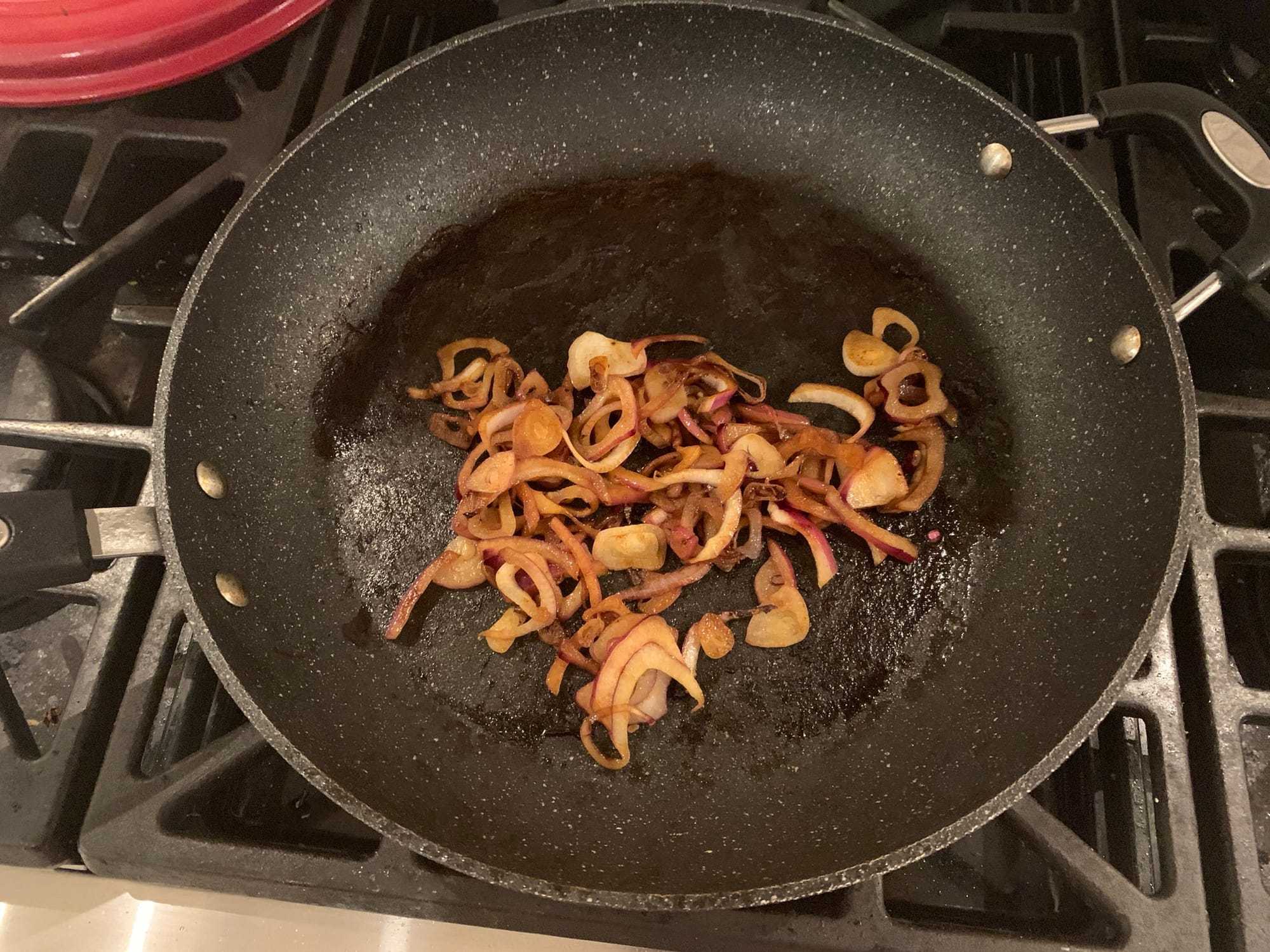
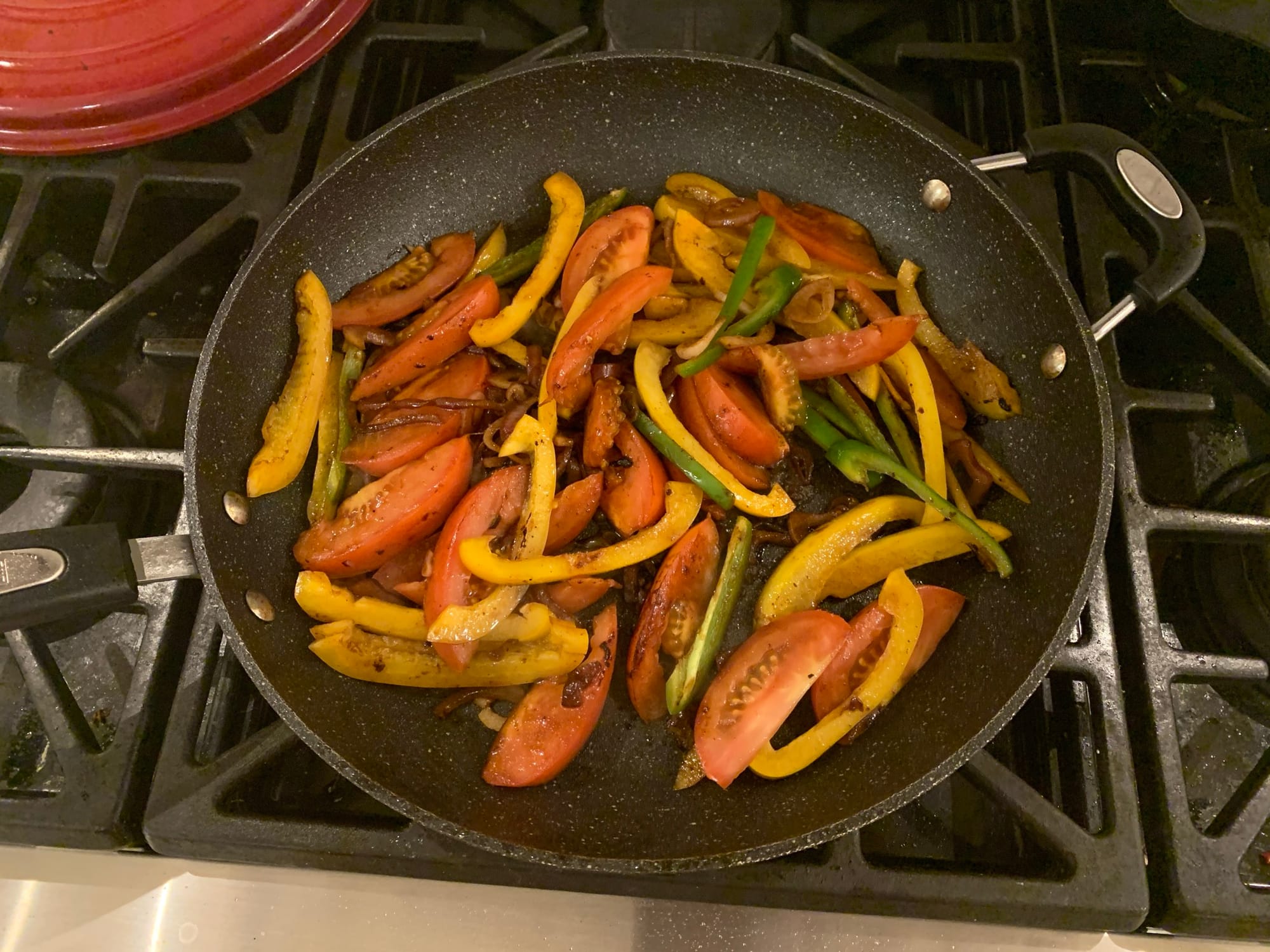
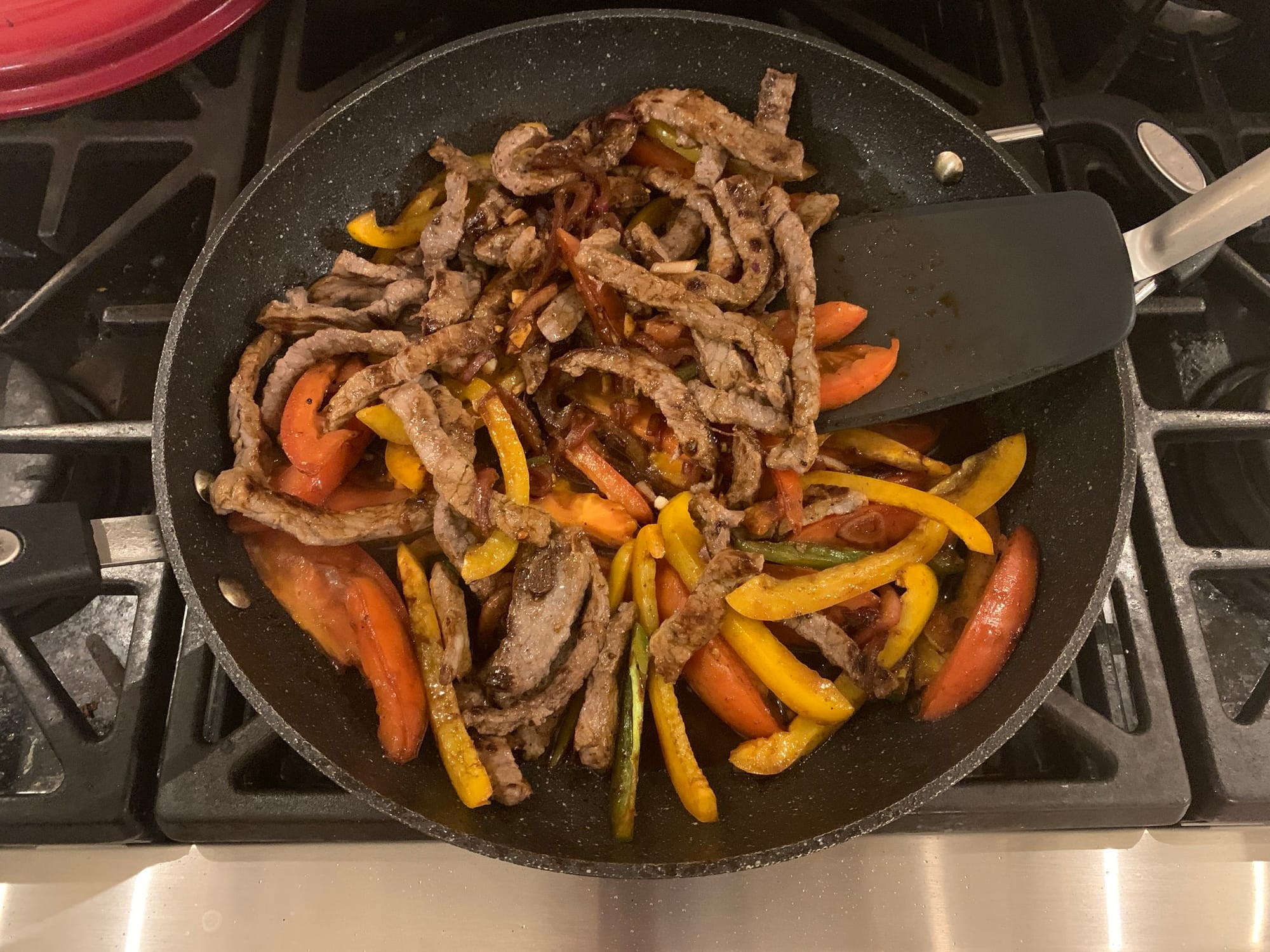
Everything for this dish is cooked in stages: first you sear your steak, then you take it out and cook the onions until browned. Next, you add the tomatoes and peppers and cook until they're lightly softened. The point of a stir fry is that your protein is cooked but the vegetables are tender crisp and not mushy, especially the tomatoes. With all the vegetables in, the sauce is poured in and reduced, before you add the steak back in and some cilantro (if you have any left, I didn't).
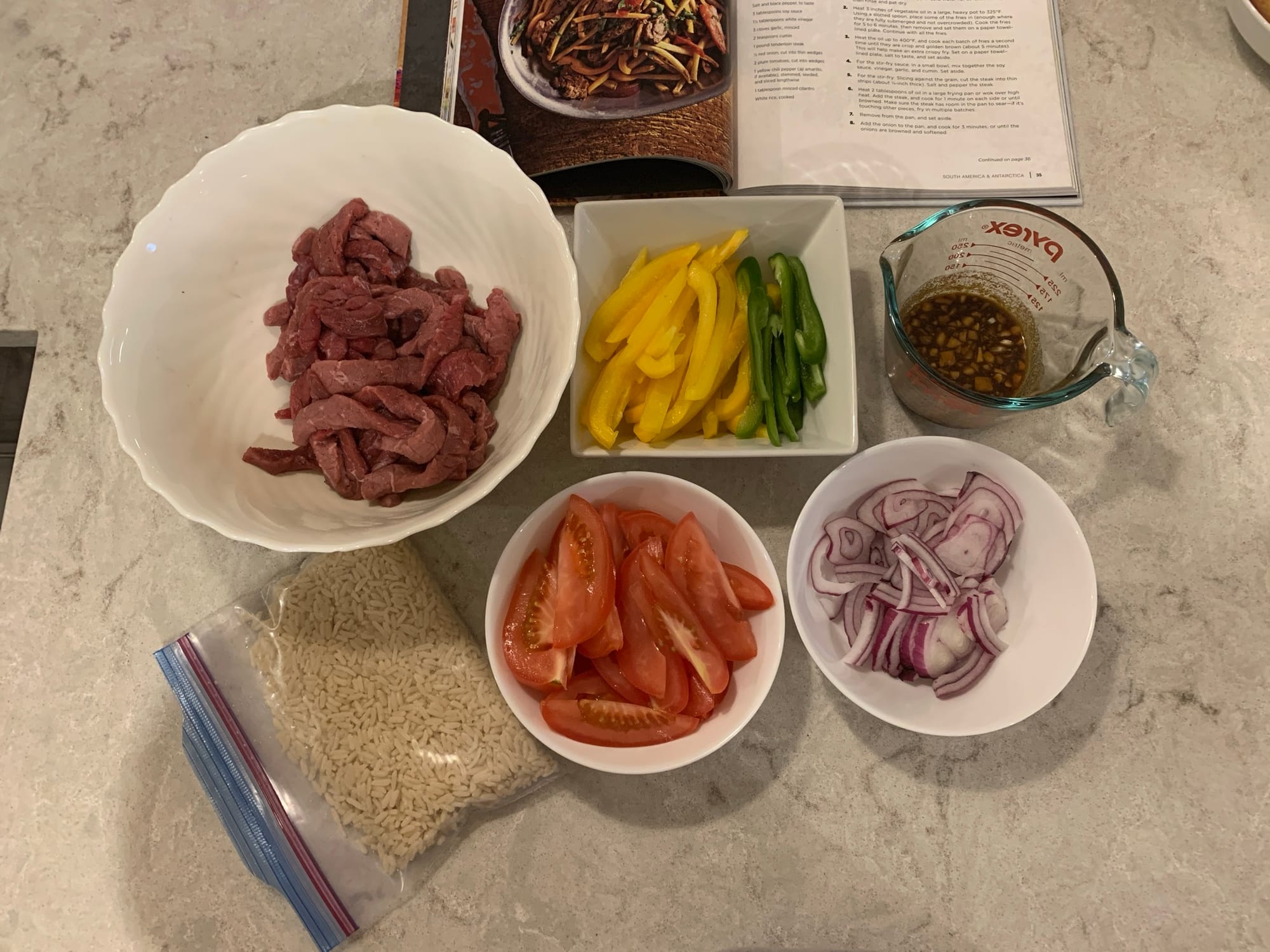
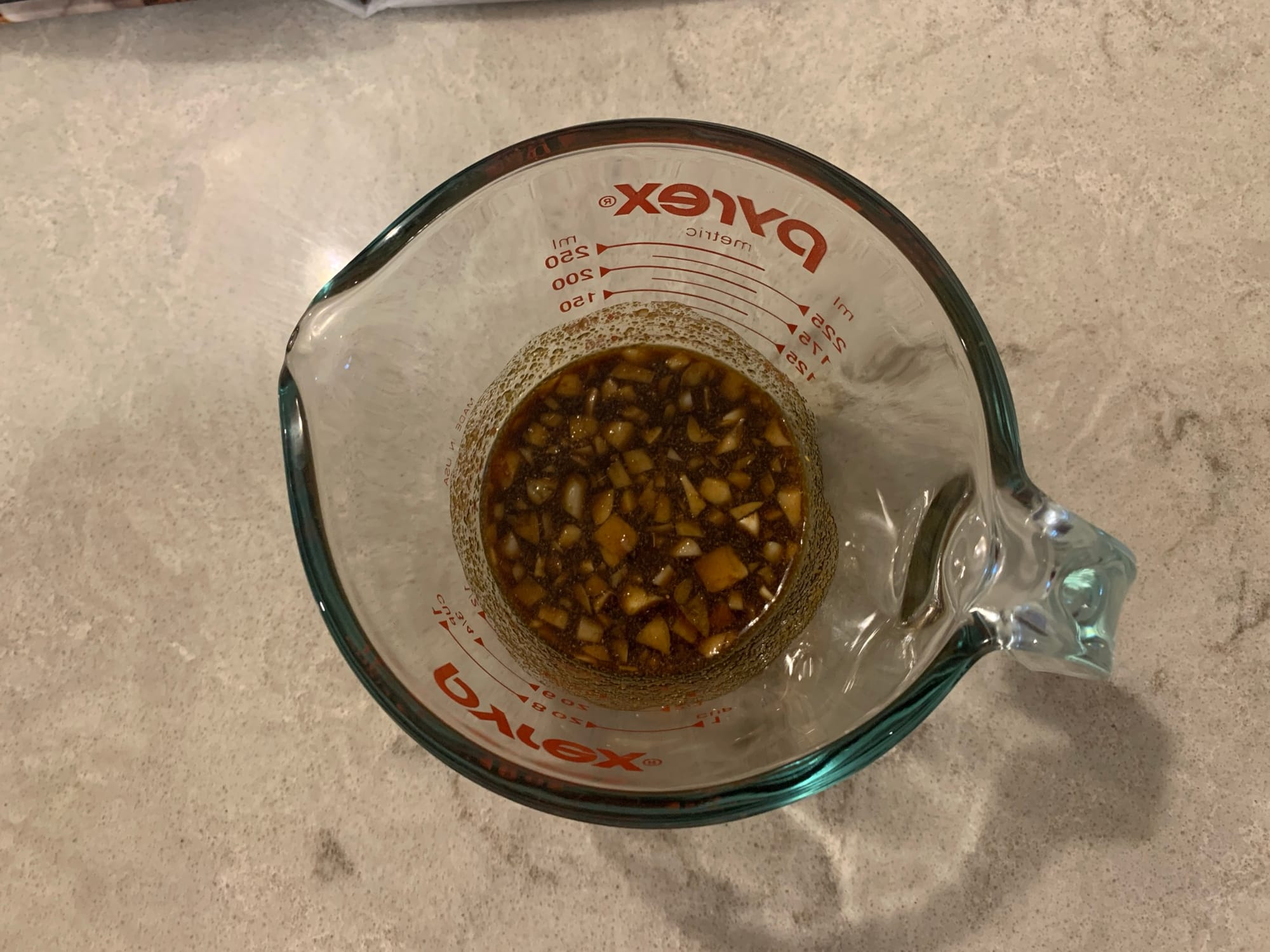
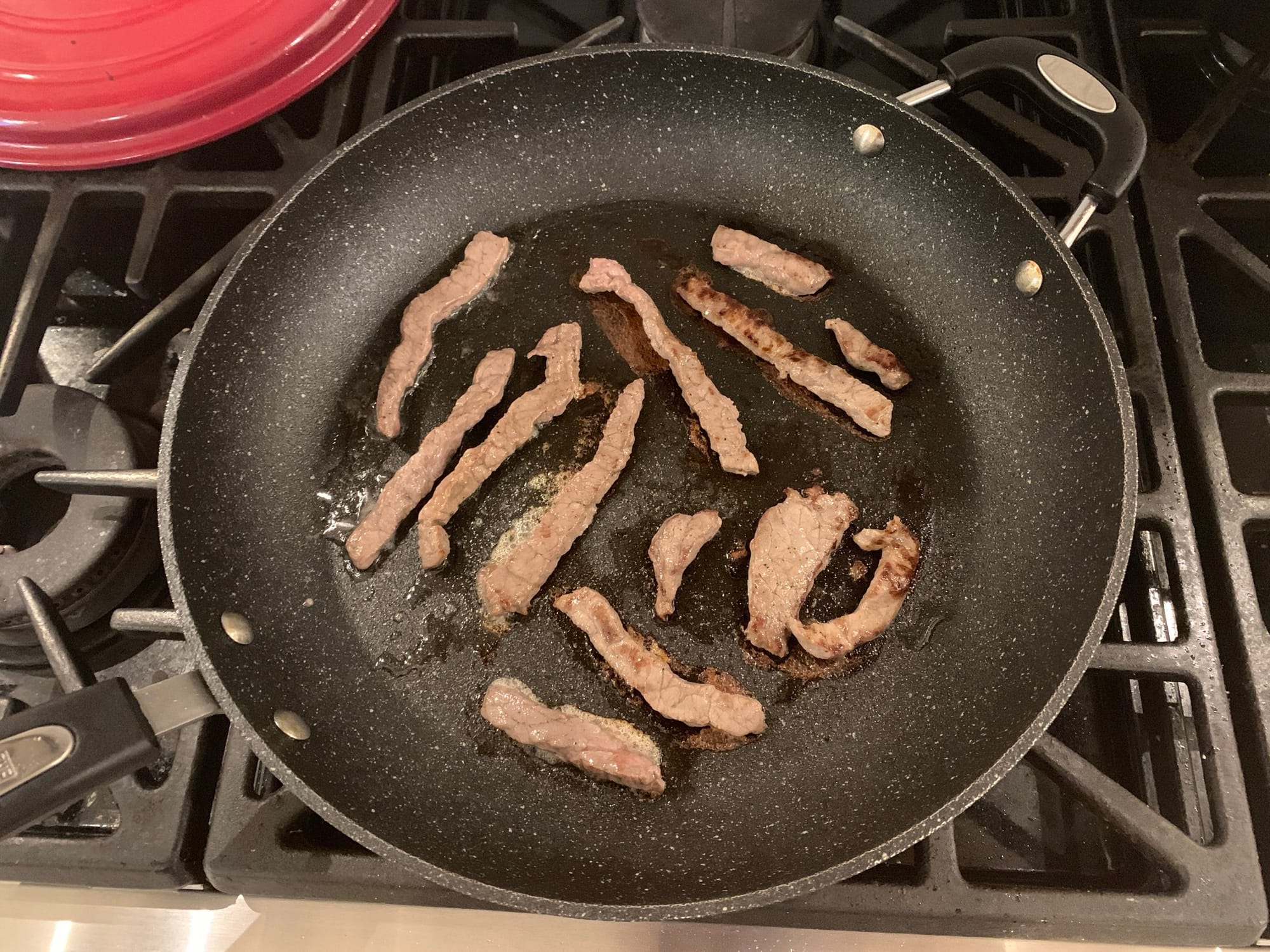
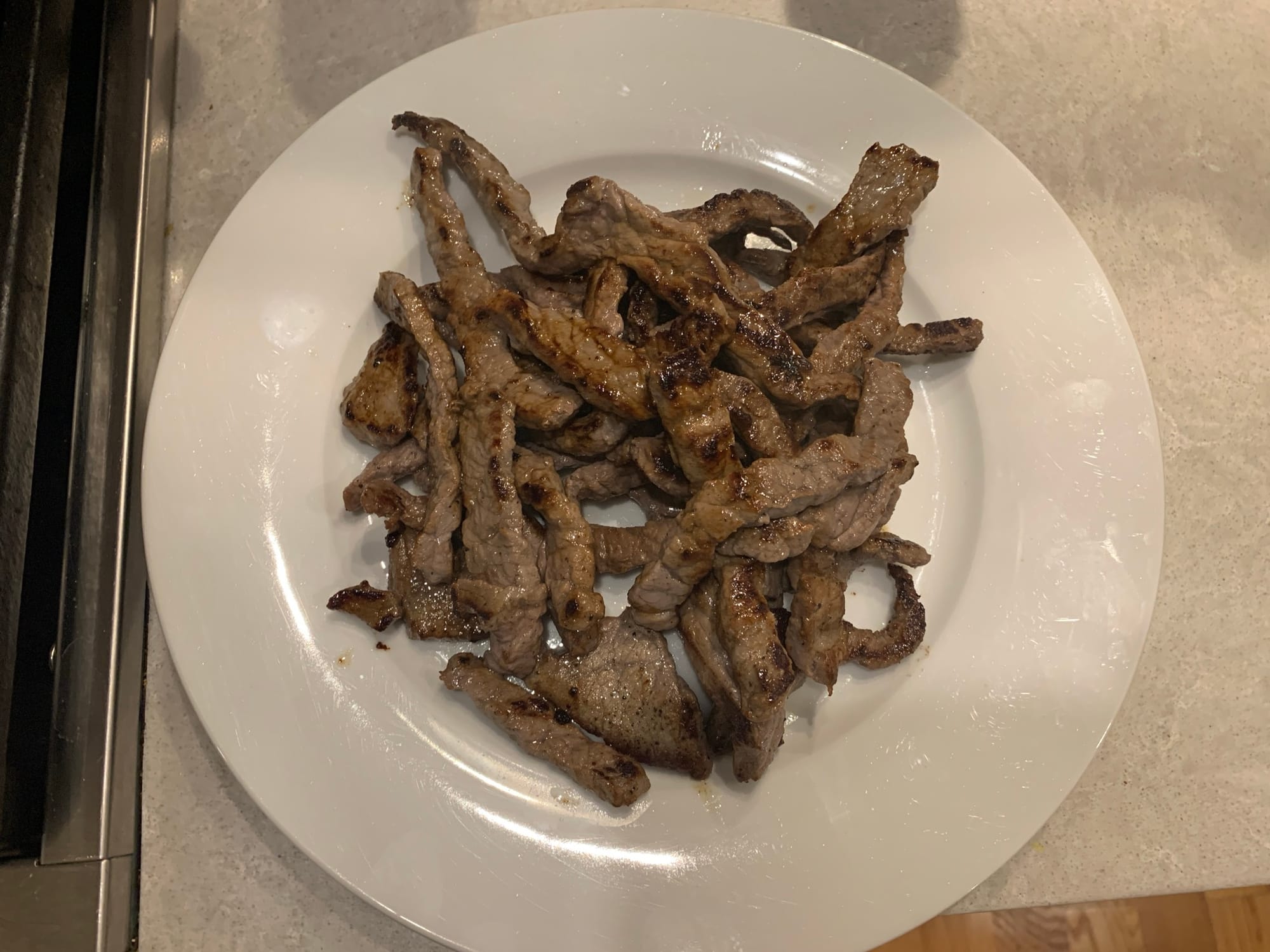
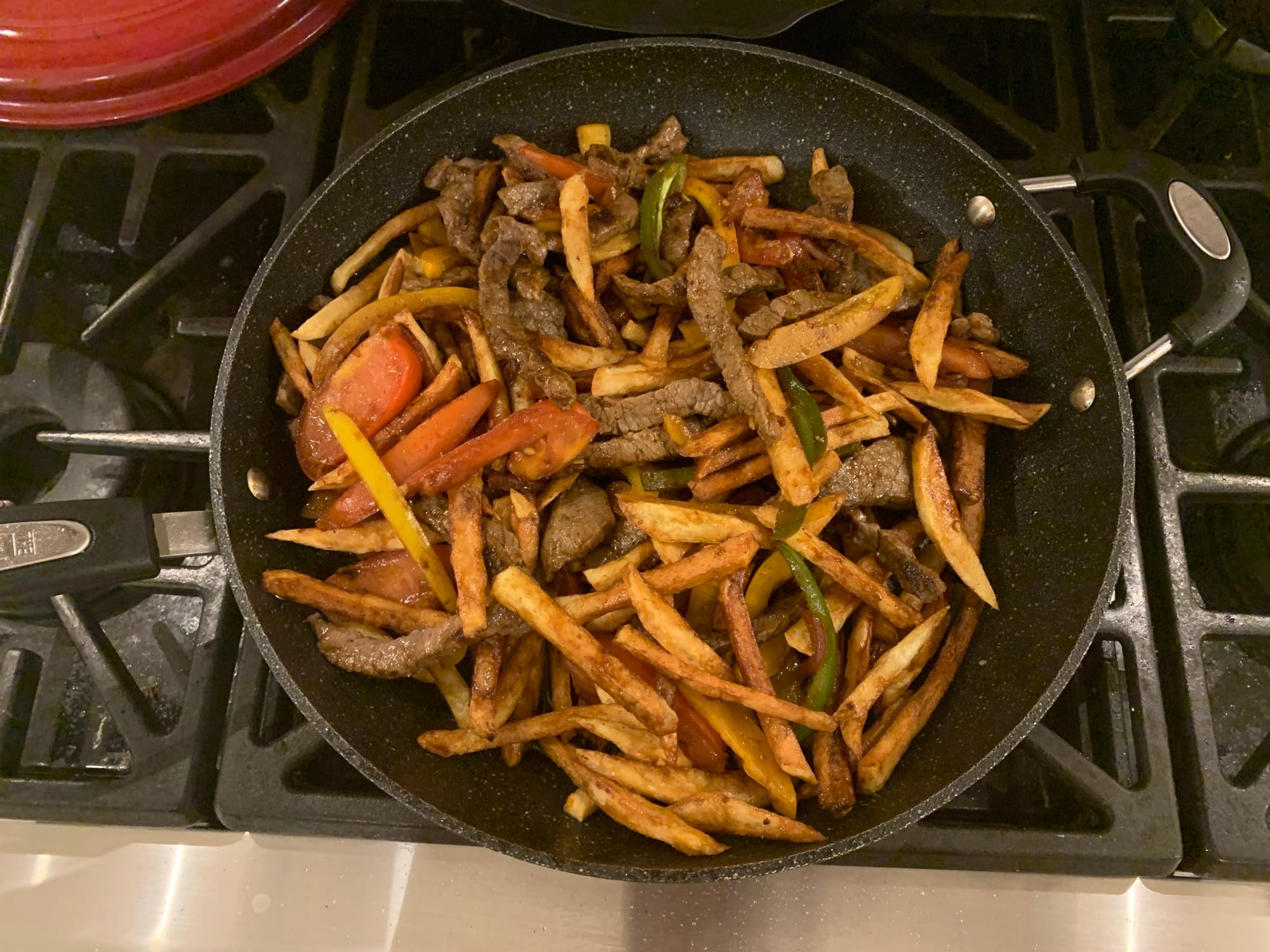
All that's left to do is stir in your fries at the last minute to ensure they stay crisp, and then serve it with rice and the Aji Verde sauce on top. This was very flavorful, fruity and spicy in a good way! Perhaps one of my favorite dishes out of this cookbook, and certainly deserving of being the front cover's recipe. The Aji Verde, as a heavily cilantro-based sauce, was even enjoyed by one of the friends I made this for, for whom cilantro tastes like soap. Damn, I'm good.
I can't wait to re-explore Peru in Tomb Raider: Legacy of Atlantis next February, and to hopefully visit the country myself one day. Until then, I'll keep myself busy making the remaining dishes from the cookbook.
If you want to make this recipe for Lomo Saltado yourself, you can find it in Tomb Raider: The Official Cookbook and Travel Guide.