Christmas Chicken from Lessons in Chemistry

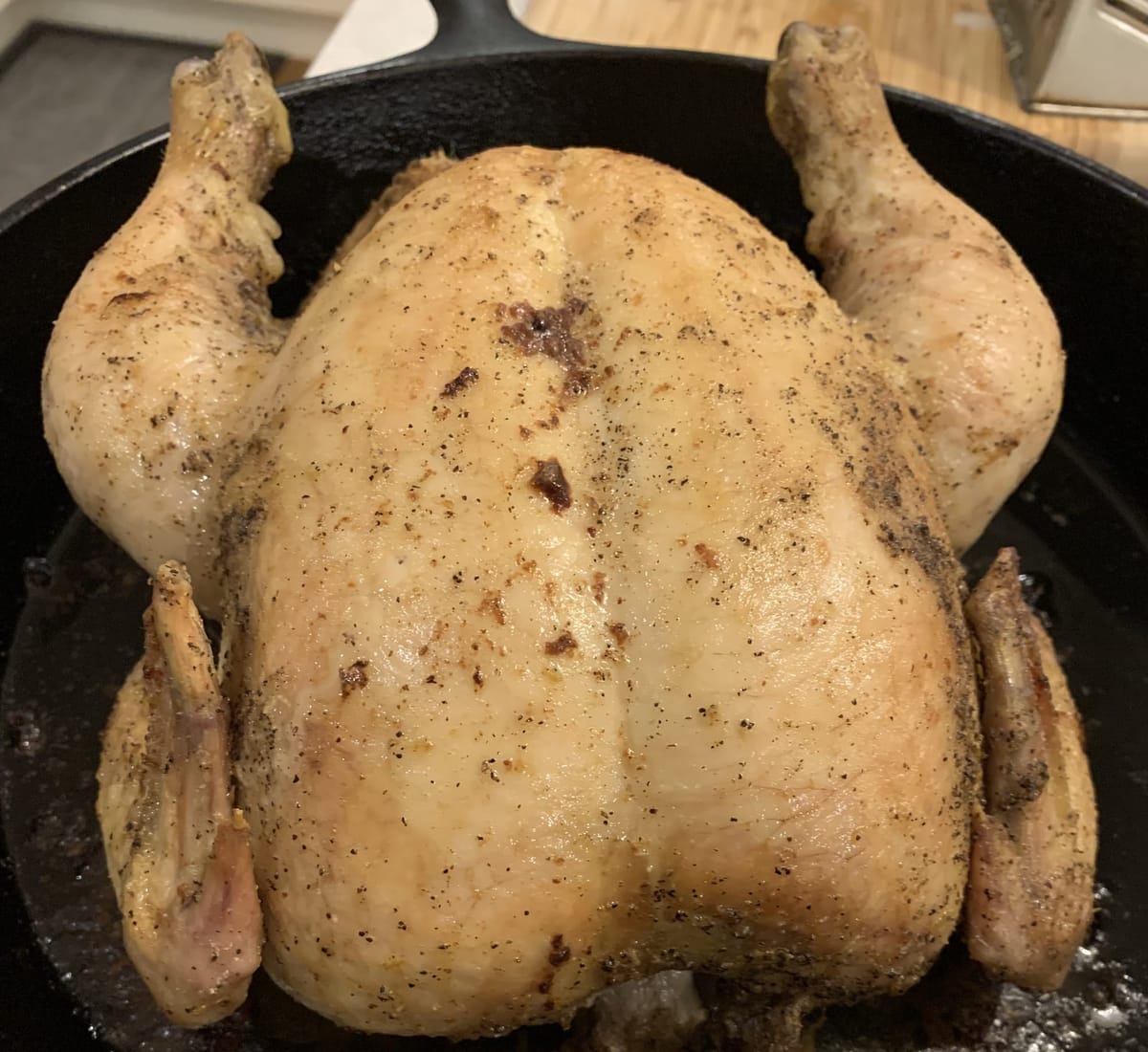
There is nothing better than a roast chicken. When you sink your teeth into that crispy skin, when the flavorful juices flood your mouth, there is no greater feeling in the world. Of course, it can be tricky to do if you’re inexperienced, and ovens are temperamental, some cooking faster, some slower. But the purpose of cooking, and this blog in particular, is to learn. I learn by doing, and screwing up, often repeatedly. That has been my experience as a cook, but I’m never discouraged.
This is the only dish in Chemistry with a written recipe that Elizabeth Zott does not make. Instead, it’s made for her by her love interest, Calvin Evans. He asks her to meet him in the Hastings Laboratory cafeteria in two and a half hours, during which he prepares a romantic feast of the chicken. The name comes from the fact that he makes it for her around Christmas. When I made it, it wasn’t Christmas, but a few weeks before. Make it whenever you want.

Elizabeth: You cooked for me?
Calvin: I can't promise it'll taste as good as yours. But, um, you know, I did a practice run, and it was... it was edible.
Elizabeth: The open flame is a safety hazard. [referring to the candles]
Calvin: Well, just wait till you try the chicken. [both chuckle] This is odd. I'm...
Elizabeth: Yes.
Calvin: Too far?
Elizabeth: Mm-hmm. [he chuckles and moves to sit next to her]
Calvin: You know, um, it's not... I mean...
Elizabeth: It's good. Well done.
Calvin: Well done? [chuckles] Not well done. It's well-done.
Elizabeth: [chuckles] It's good.
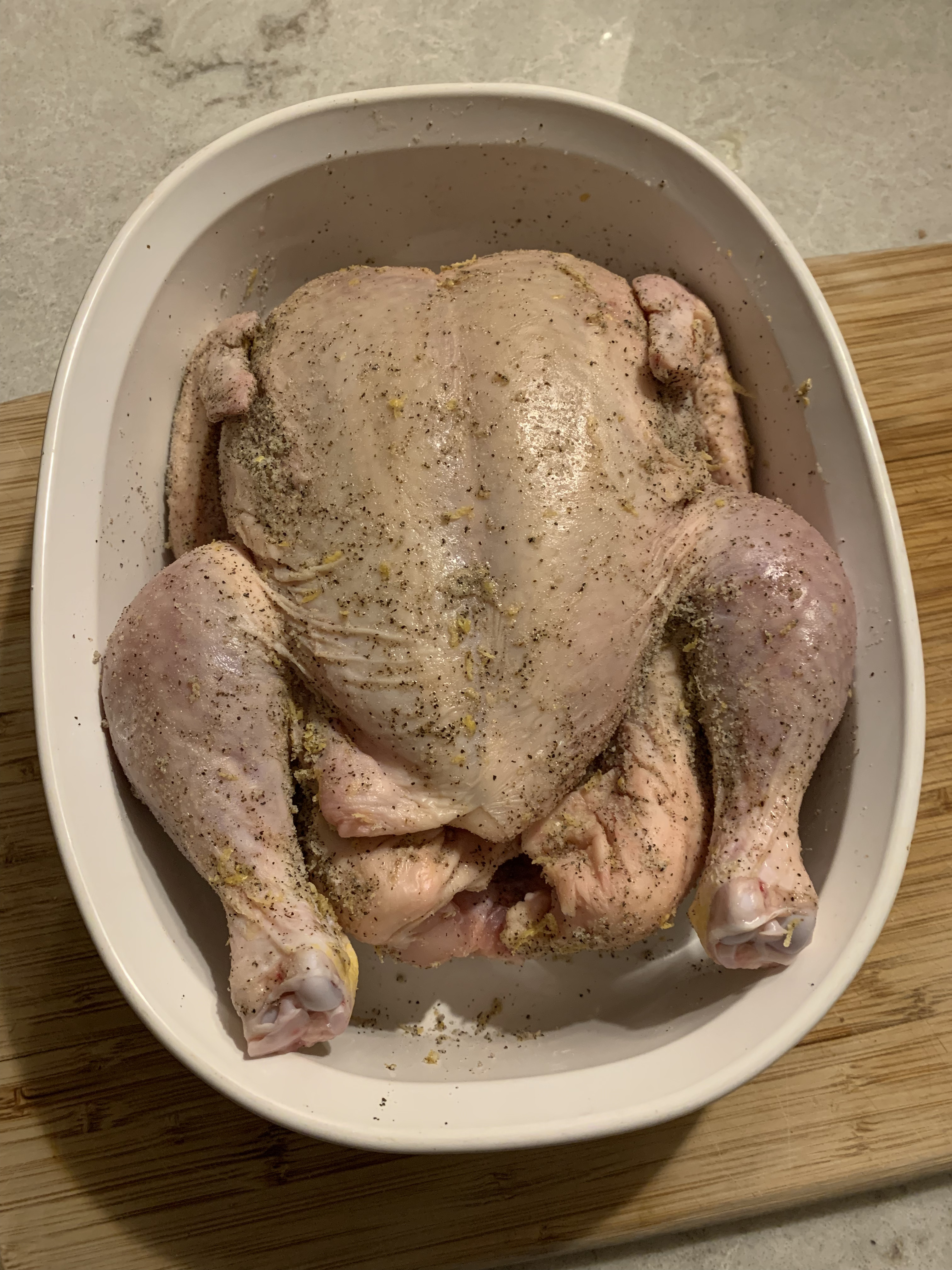
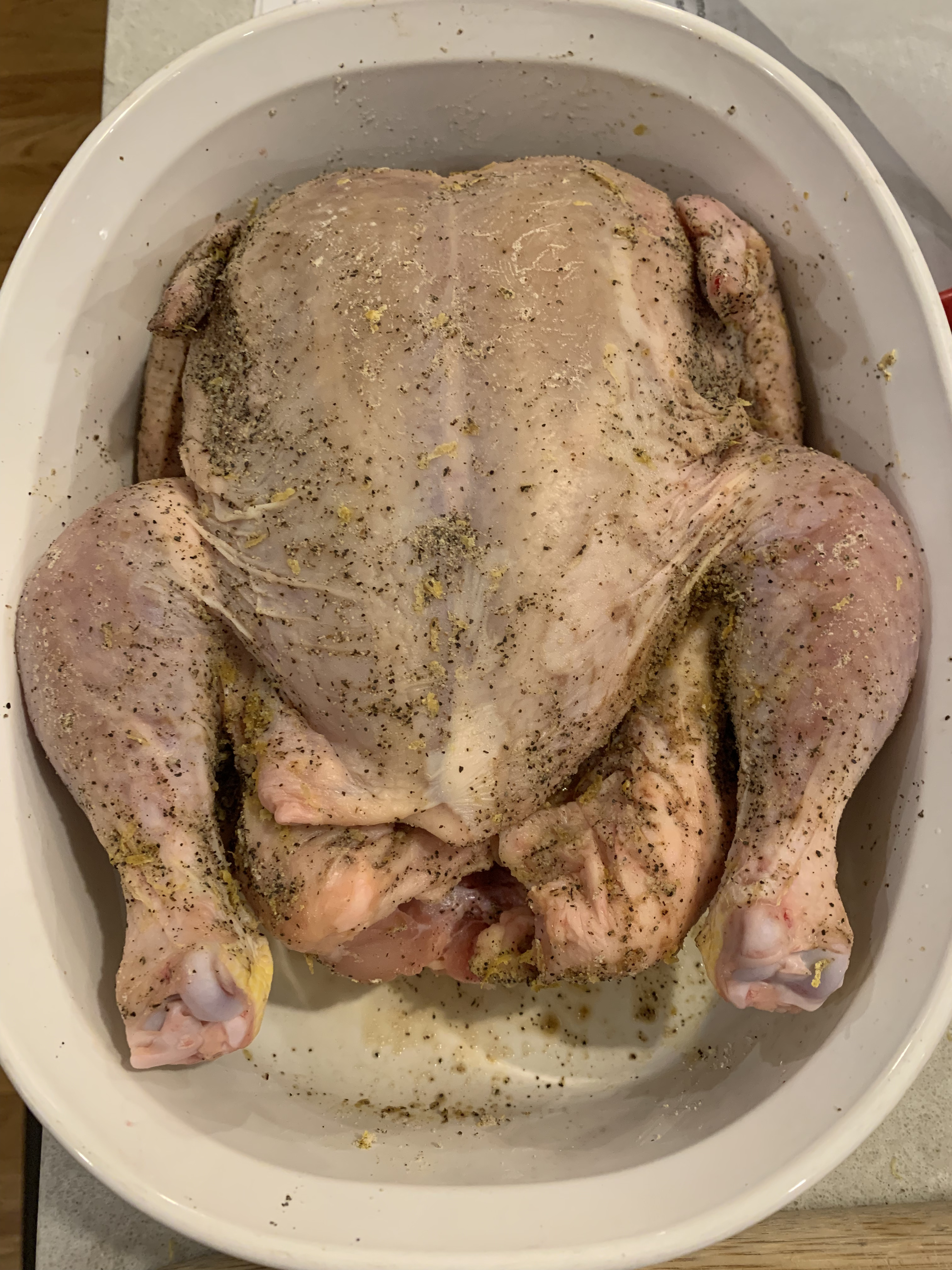
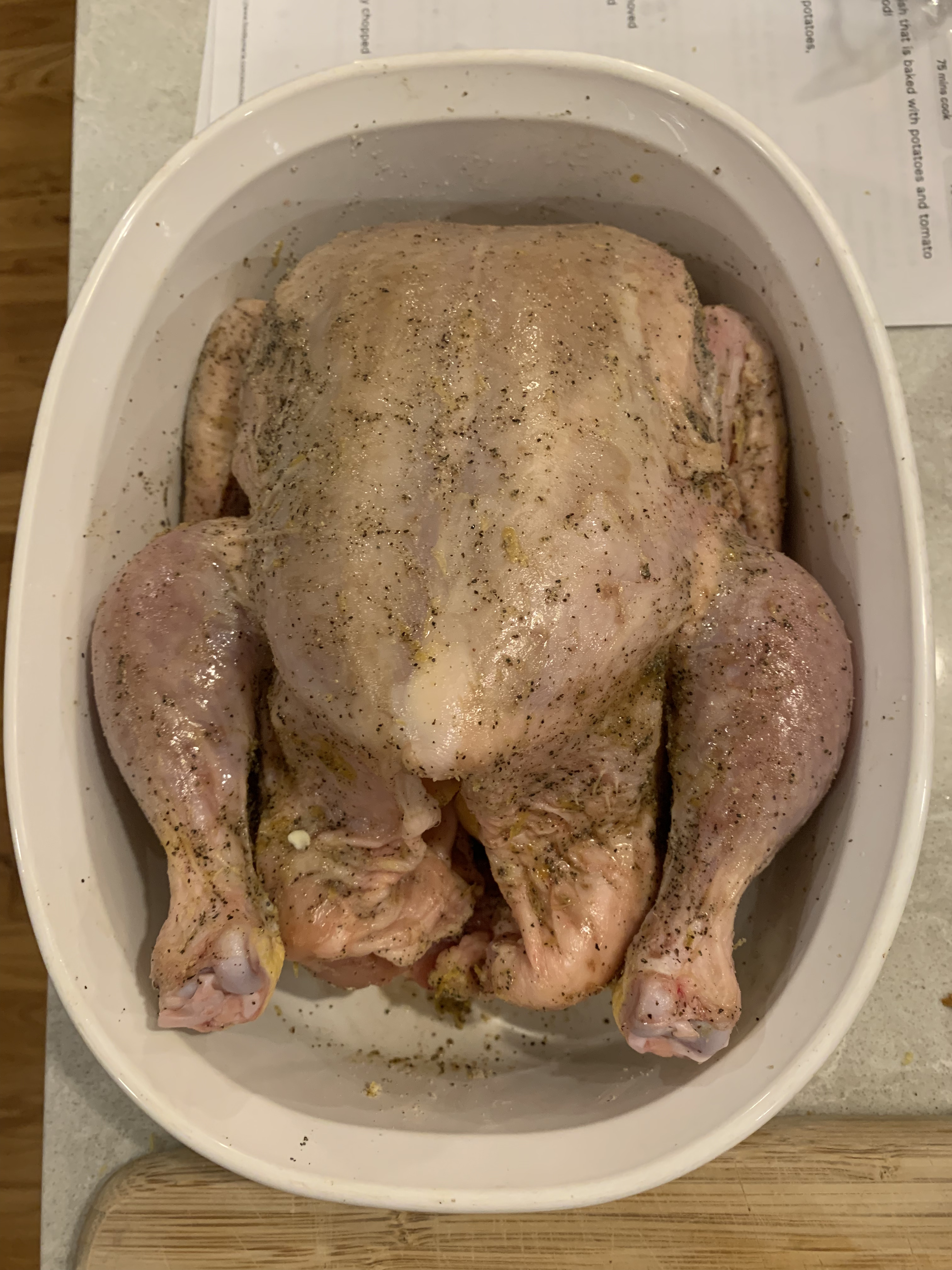
What makes this roast chicken unique is the dry rub ingredients for it. It uses both lemon zest (along with lemon quarters and butter inside the cavity), and baking powder. I wasn’t sure what the latter ingredient accomplished; it’s not a pastry, so there’s no rising in the oven. According to this article from Allrecipes, it helps to achieve a crisp skin. I’m all about that. With my question answered, I got to work.
The aforementioned dry rub is put onto the chicken the night before so it can tenderize the skin in your fridge overnight, uncovered. Important: do not have it near cooked meat in your fridge due to cross contamination. I have a second fridge, and I ensured there was nothing else in it before I put the chicken in there.
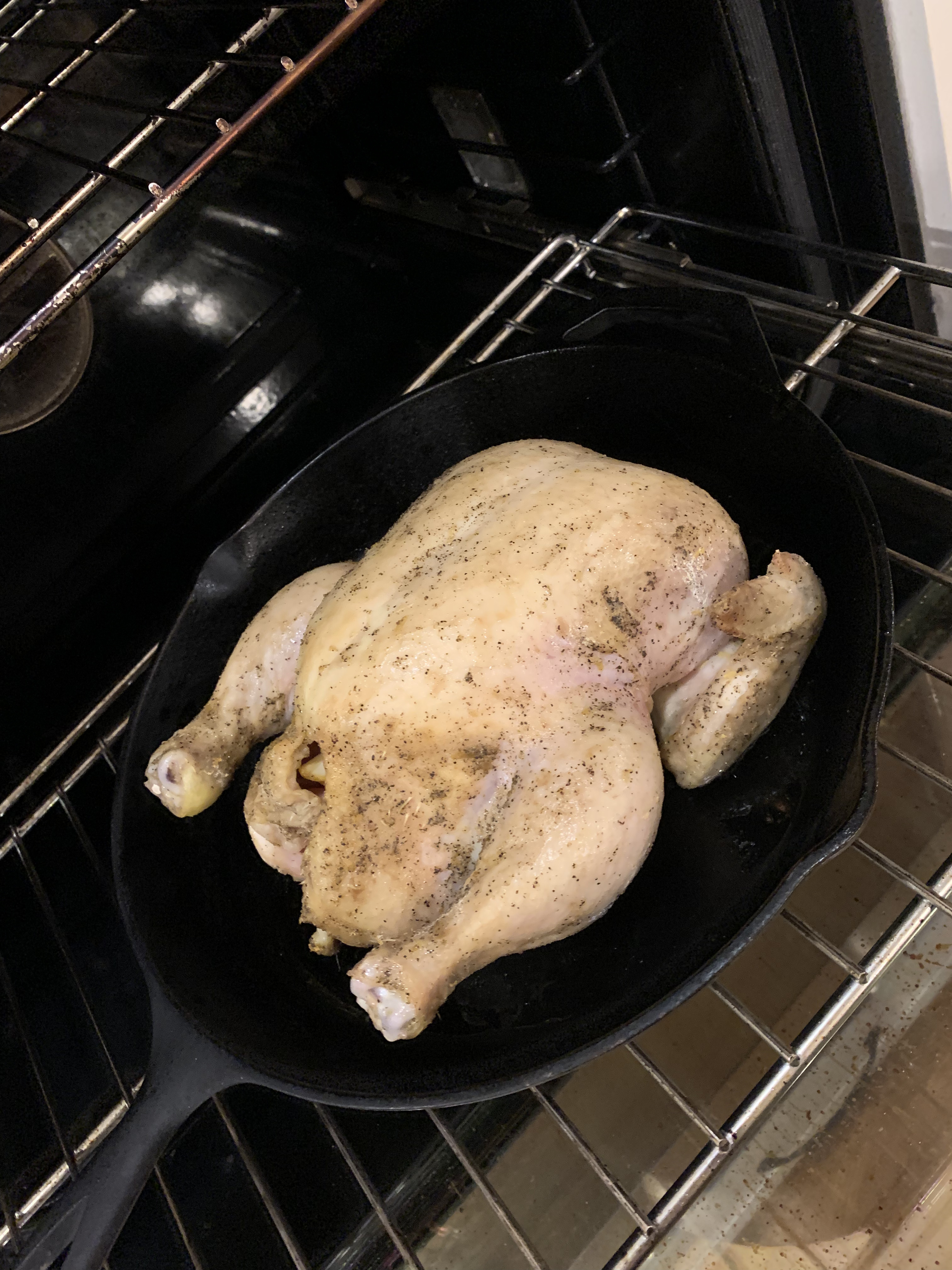
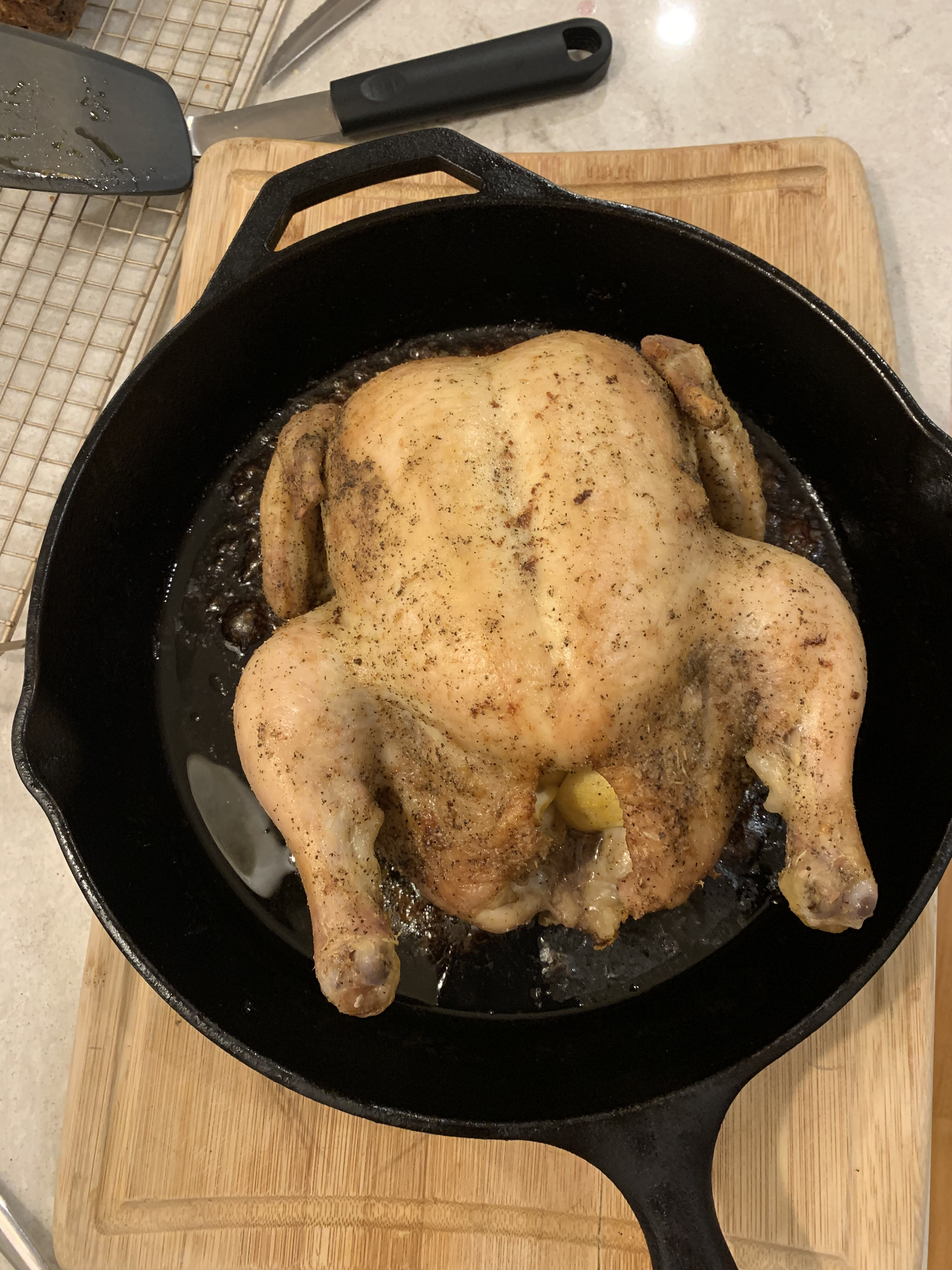
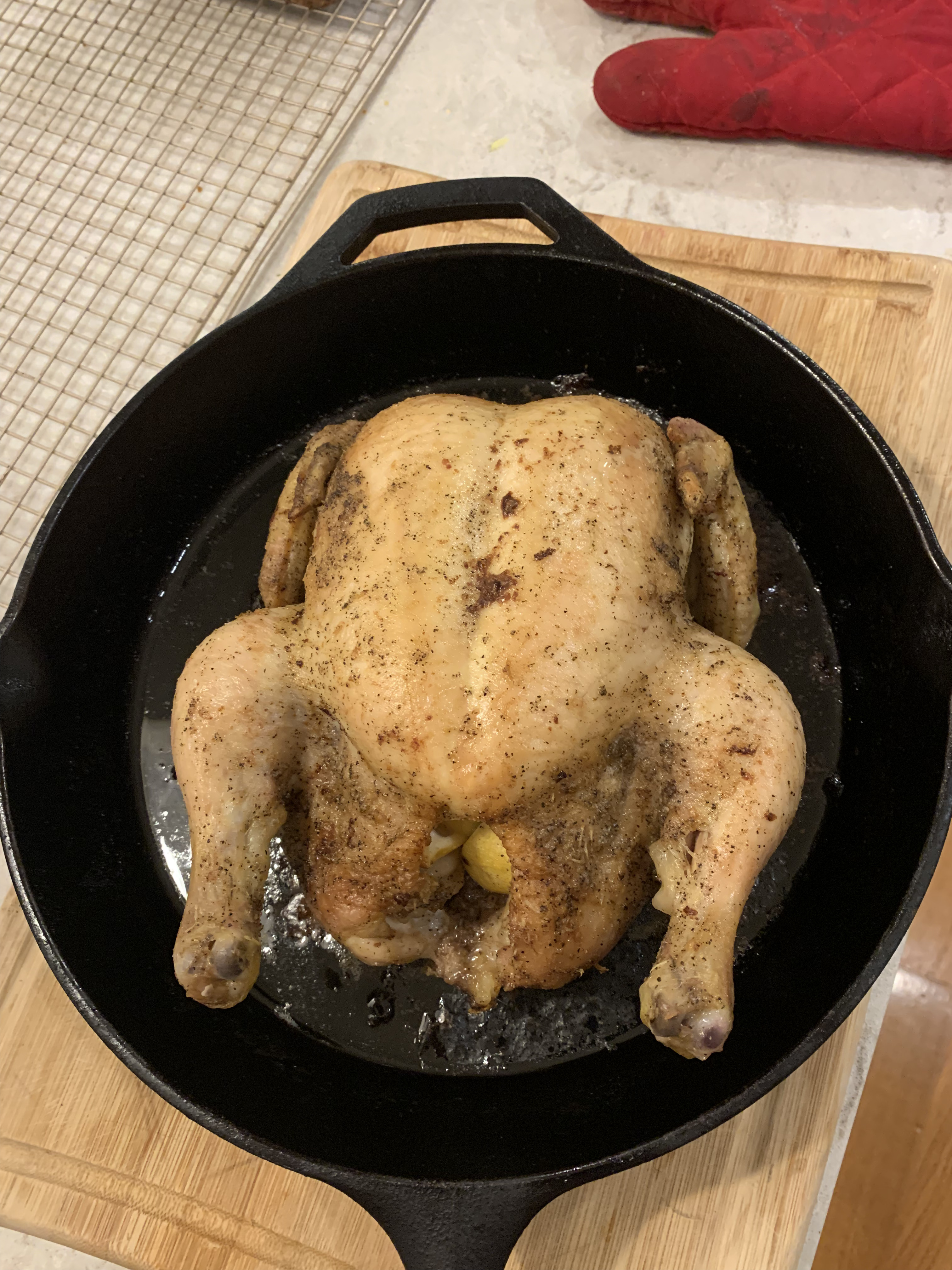
The second step to achieving a very crispy exterior is preheating a cast iron skillet along with your oven. The third is to coat the chicken skin in olive oil. To achieve a juicy chicken, a half stick of butter is stuffed inside, which will mix with the natural juices the bird releases as it cooks. Then it’s a case of basting in 15 minute intervals until the chicken is fully cooked. The written recipe says it’s done when you insert a thermometer into the thigh meat and it reads 155°F. Since it has to rest for 15 minutes after, there’s plenty of time so the carryover cooking will finish it.
Afterwards, all you need to do is carve it and whisk the pan juices into a sauce. When I did this, my drippings were rather concentrated, so I added some chicken stock to help it emulsify. The written recipe says to serve it with eggnog, but I didn’t have any.
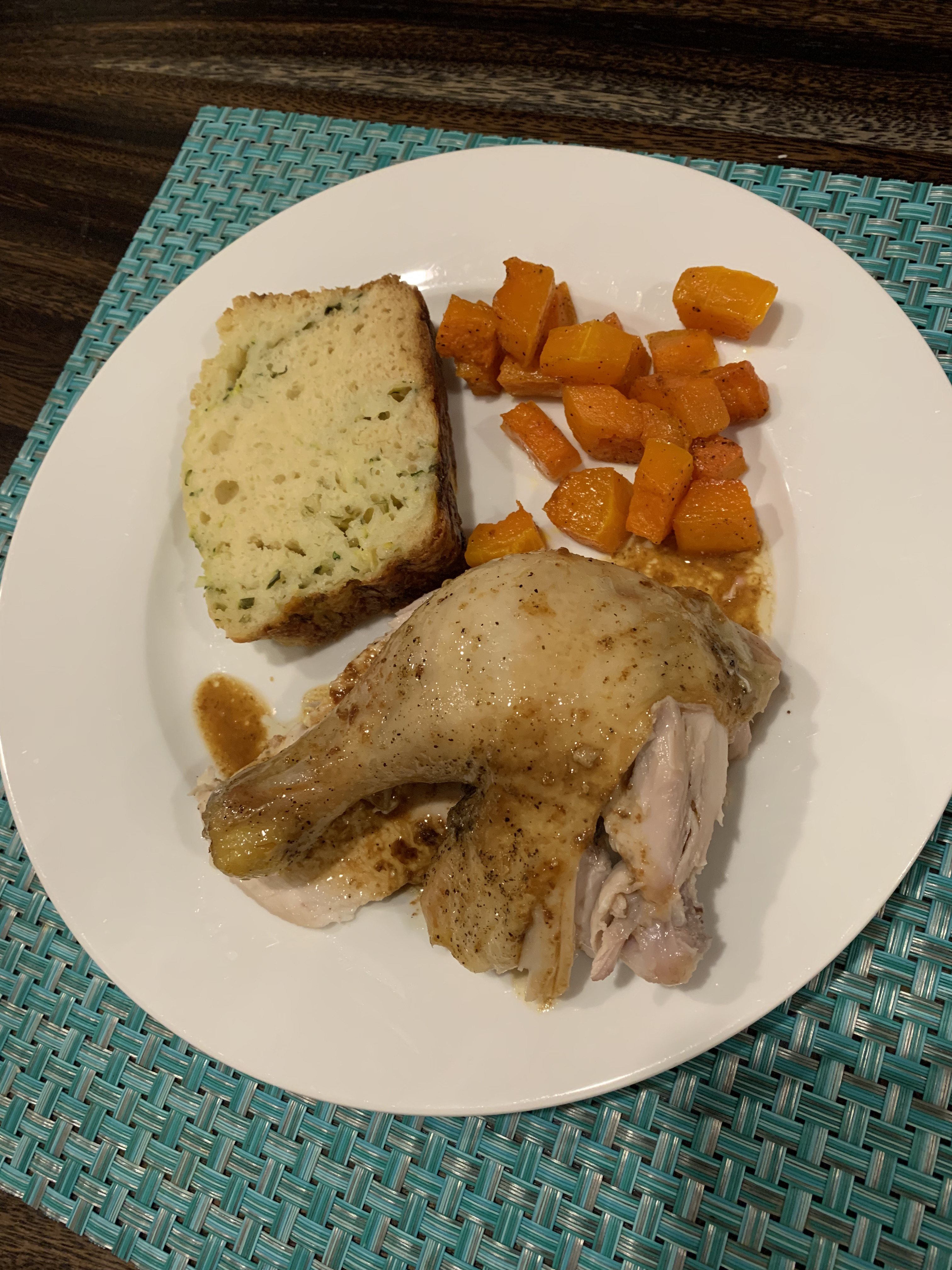
This roast chicken was life-changing. Juicy, incredibly flavorful, and the skin! Oh the skin! I always eat the skin off a store bought rotisserie chicken before I even get to the meat, that’s how weak I am for chicken skin. This one was 10x better. Very succulent and moist. As you’ll see in the gallery below, I served it with roasted butternut squash and cheddar chive zucchini bread.
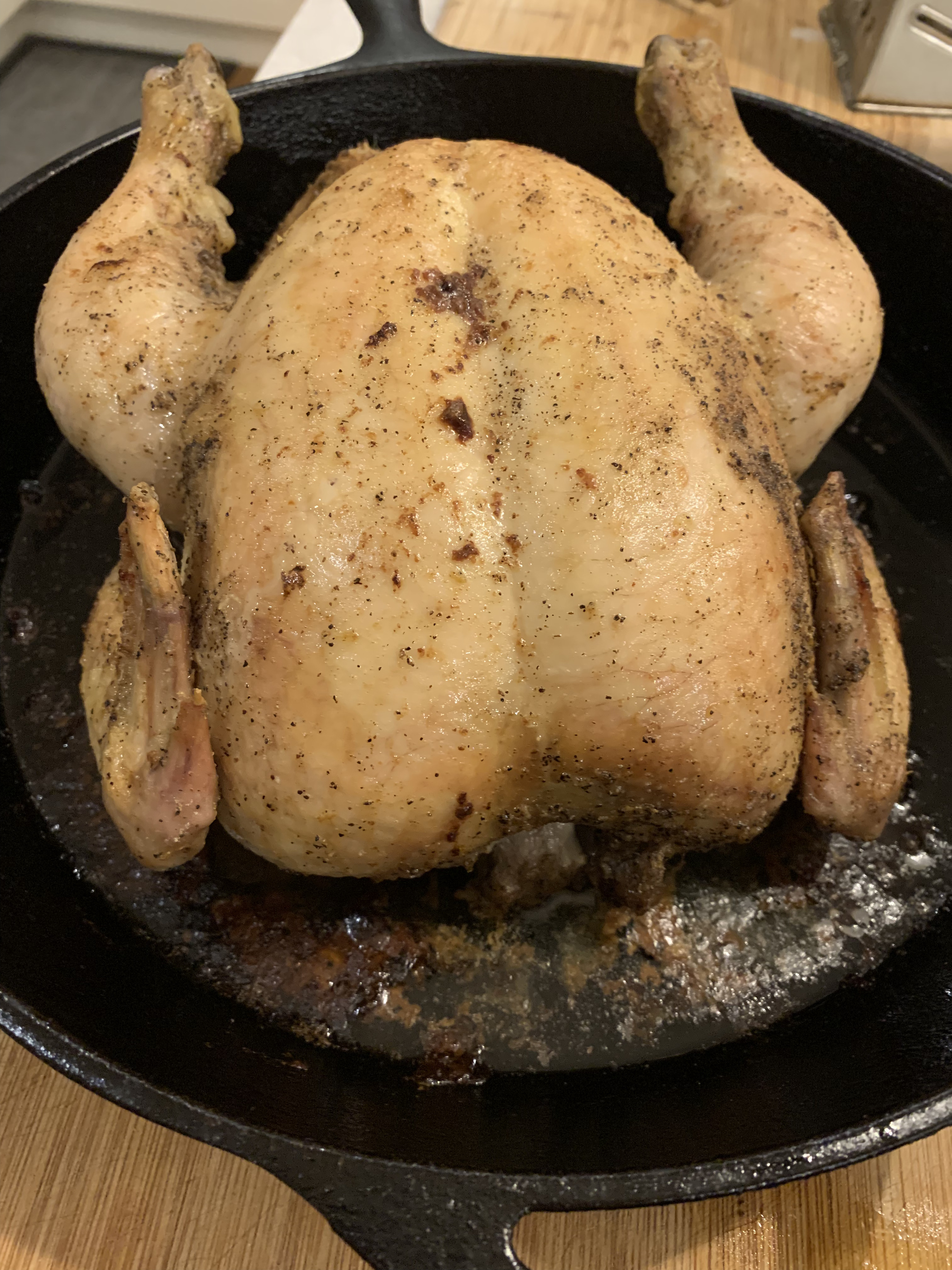
If you want to make this recipe yourself, you can get it on the official website here. You can also watch an Instagram Reel narrated by the recipe’s developer, Courtney McBroom, here.
Image from Lessons in Chemistry are the property of Apple TV+. All other photographs are the property of Ate Bit Culinarian.